Light diffusing materials are materials that can convert point and line light sources into line and area light sources. Generally speaking, the function of such materials is to make the light source less dazzling to the naked eye after refraction, reflection and scattering. Then Prismatic Diffuser Panel Factory will guide everyone to understand the common light diffusion materials in LED.
At present, the preparation methods of light diffusion materials mainly include polymerization method and blending modification method.
1. The polymerization method
The pseudo-polymerization method is based on the principle of light refraction, and selects two polymer monomers with a certain difference in refractive index and poor compatibility to polymerize together or uses segmented polymerization to further prepare light-scattering light-diffusing materials. Two monomers with different reactivity are prepared by polymerization, because the scatterer monomer and the monomer forming the matrix have different reactivity, the scatterer monomer is self-polymerized or copolymerized with the matrix monomer, so that the two monomers The optical properties of the cohesive nuclei formed within the respective polymer chains are homogeneous, and light is reflected and refracted at the boundaries of the cohesive nuclei, so scattering is formed. The polymerization method is widely used in the preparation of PMMA Acrylic Sheet materials.
2. Blending modification method
The blending modification method is to add a light diffusing agent to the resin. The light diffusing agent is spherical and uniformly dispersed in a transparent resin to form an island structure. Due to the different refractive indices of the resin and the light diffusing agent, the light is similar to specular reflection on the surface of the light diffusing agent. After multiple reflections, the light diffusion effect is achieved. At the same time, the amount of light diffusing agent added, particle size and distribution, and refractive index determine the optical properties of the material.
At present, many light diffusing materials are generally produced using this method, because this method is similar to polymer doping, and the process is simple, especially for light diffusing plates with very large amounts. This method can be used for continuous production and production.
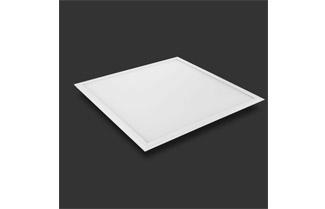
J.K Acrylic Diffuser
The following mainly takes the blending modification method as an example.
1. Mechanism
The mechanism of the light diffusing material is mainly to add organic or inorganic particles as scattering particles in the substrate of the diffusion plate, so that the light continuously refracts, reflects and scatters in two media with different refractive indices when passing through the scattering layer. This produces the effect of optical diffusion.
2.Materials
As the base material of the light diffusing material, it is required to have a high light transmittance. Common base materials are mainly PMMA, PS and PC. The base light diffusivity is as follows:
The refractive index determines how bright the material looks. A larger refractive index indicates that more light is reflected at the interface between the material and the air. Generally, the higher the refractive index, the lower the transmittance.
3. Light diffusing agent
According to the composition of light diffusing agent, it can be divided into organic diffusing agent and inorganic diffusing agent.
4. Organic light diffusing agent
This type of light diffusing agent mainly includes acrylic type, silicone type, polyethylene type, etc. At present, the most widely used are acrylic and silicone type light diffusing agents. This type of light diffusing agent has good transmittance. Silicone has the advantages of less addition and good haze, and the transmittance of acrylic acid is better.
Inorganic light diffusing agents mainly include: nano-barium sulfate, silicon dioxide, calcium carbonate, etc. These inorganic light diffusing agents are solid microspheres from a microscopic perspective, and it is difficult for light to pass through the solid spheres, which will affect a lot of light. Through, only part of the light passes through refraction, so it affects brightness or light transmission. It is currently used relatively rarely.
Our company also has J.K Acrylic Diffuser on sale, welcome to consult.
评论
发表评论